At a Glance
Roger Herman Zierenberg, Sr. — referred to as Roger Sr. throughout this page to distinguish him from his son Roger Jr. — was born in 1921 and died in 2014. This page is his family biography: the boy, the husband, the pilot, the businessman, and the grandfather his family remembered.
Born
26 November 1921 · Eagle Rock, Los Angeles, California
Died
7 October 2014 · Moorpark, Ventura, California
Buried
Newhall, Los Angeles, California — beside Juanita
Parents
Ernst "Herman" Zierenberg & Ruth Elizabeth Ricart
Married
Juanita Wilma King · 28 November 1942 · Erie, Pennsylvania · 70 years together
Family
6 children · 34 grandchildren
Military
U.S. Army Air Forces · P-40 and P-51 Mustang pilot · 5'7" · 155 lbs at enlistment
Unit
309th Fighter Squadron · 31st Fighter Group · 15th Air Force
Aircraft
Combat Record
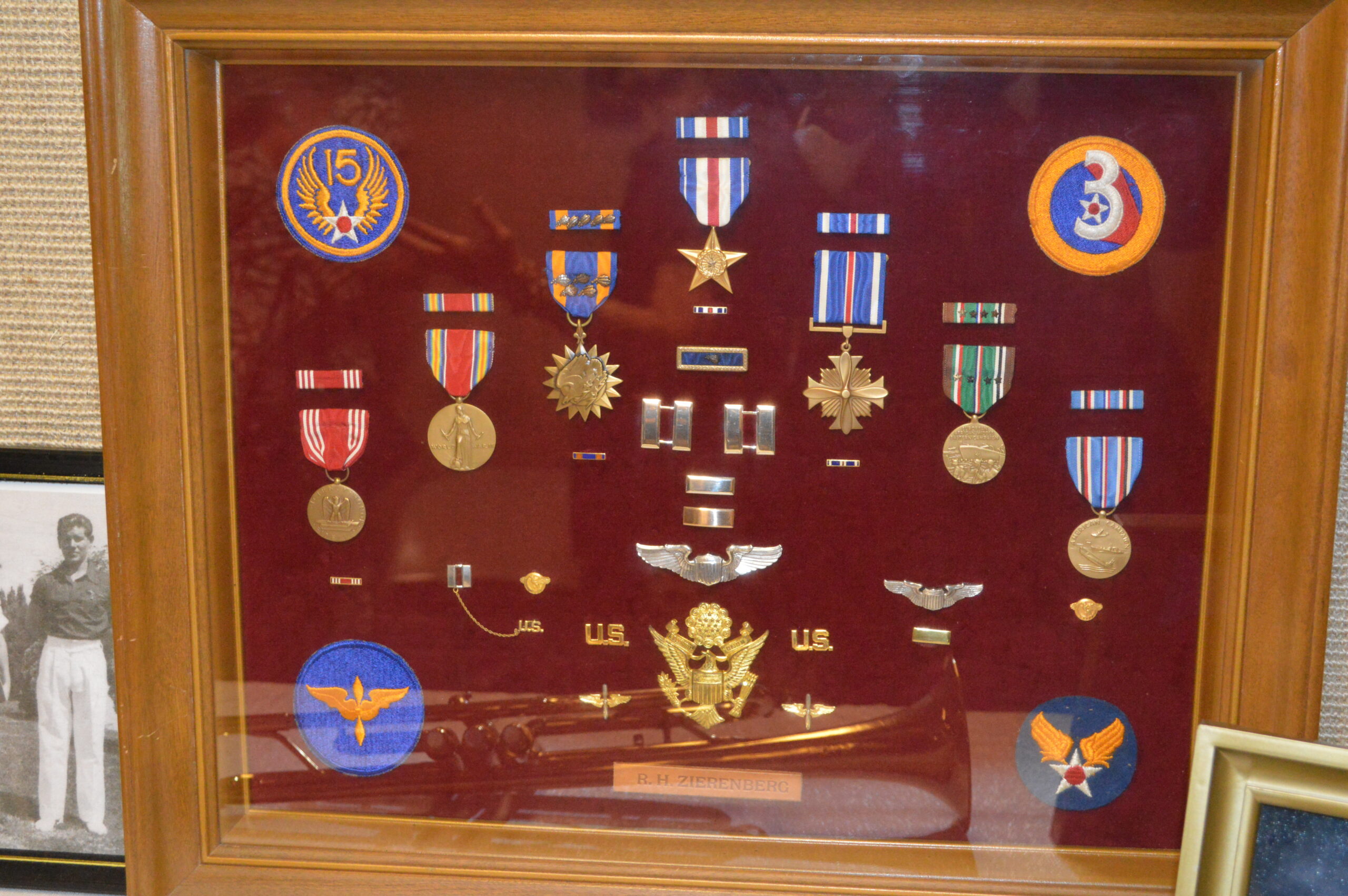
60 missions · 5 enemy aircraft shot down · Distinguished Flying Cross · Silver Star · Air Medal
Career
Draftsman → Manufacturer Representative → Independent Roger Zierenberg Company → Dale Carnegie instructor
Faith
Member, Church of Jesus Christ of Latter-day Saints · Sealed in the Salt Lake Temple with Juanita
The Life Behind the Name
Roger Sr.'s story began in a setting few descendants would expect. He was born in the mansion house at Evergreen Cemetery in East Los Angeles, where his father was the superintendent. His older sister Hermine and brother Norman had died as infants. Roger Sr. himself nearly didn't survive — he was saved by his mother's discovery that goat's milk could overcome the lactose intolerance threatening his life.
From childhood, Roger Sr. showed the traits that later marked his whole life: energy, confidence, competitiveness, humor, athletic ability, musical ability, mechanical curiosity, and a willingness to take on difficult things.
He loved hot rods, sports, trumpet, drafting, and building things. He pole-vaulted, high-jumped, dove competitively, played music, worked paper routes, mowed lawns, and learned the value of work early. Those details help explain the fighter pilot he became, but they also explain the father and grandfather his family remembered.
— Roger Jr., his son
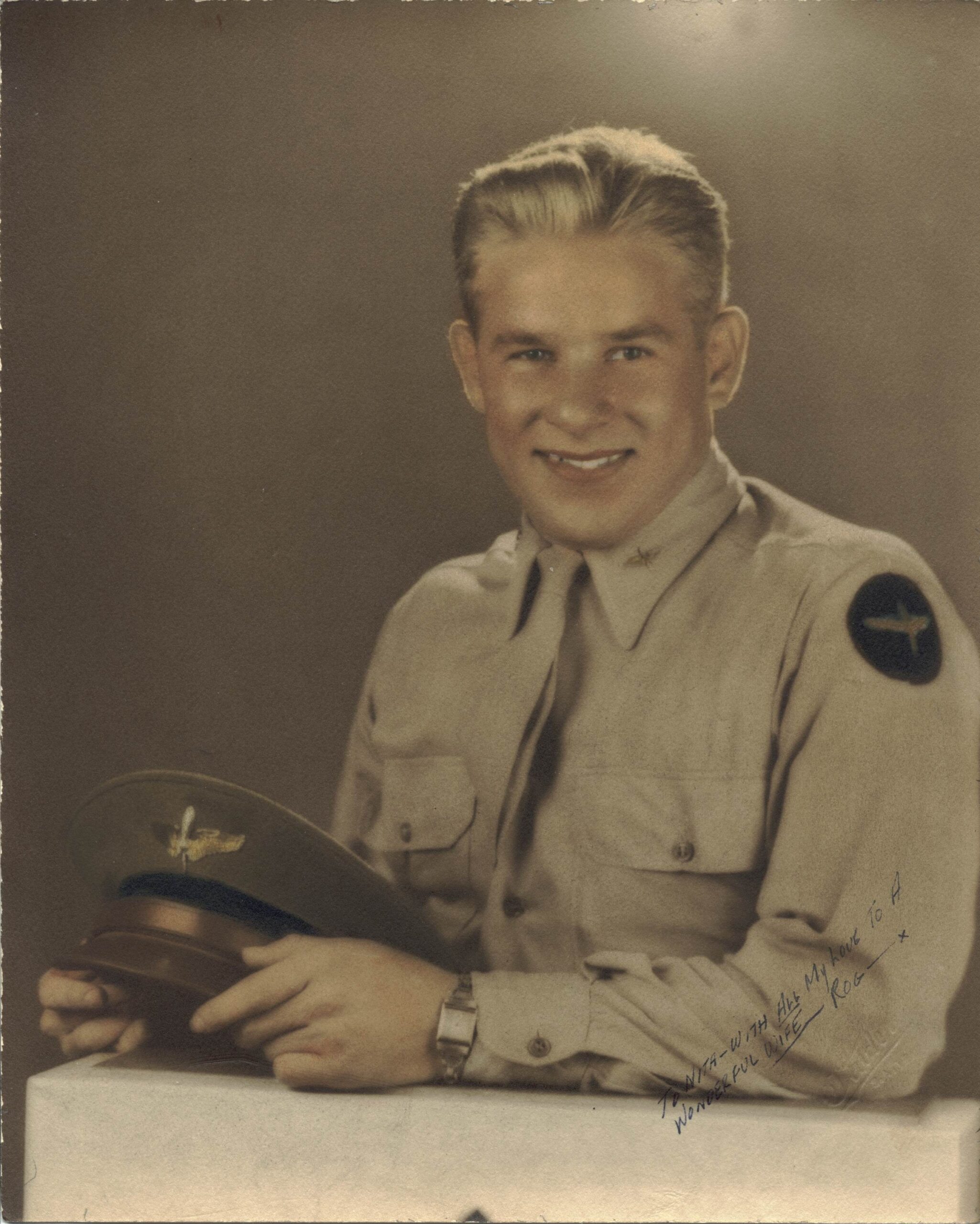
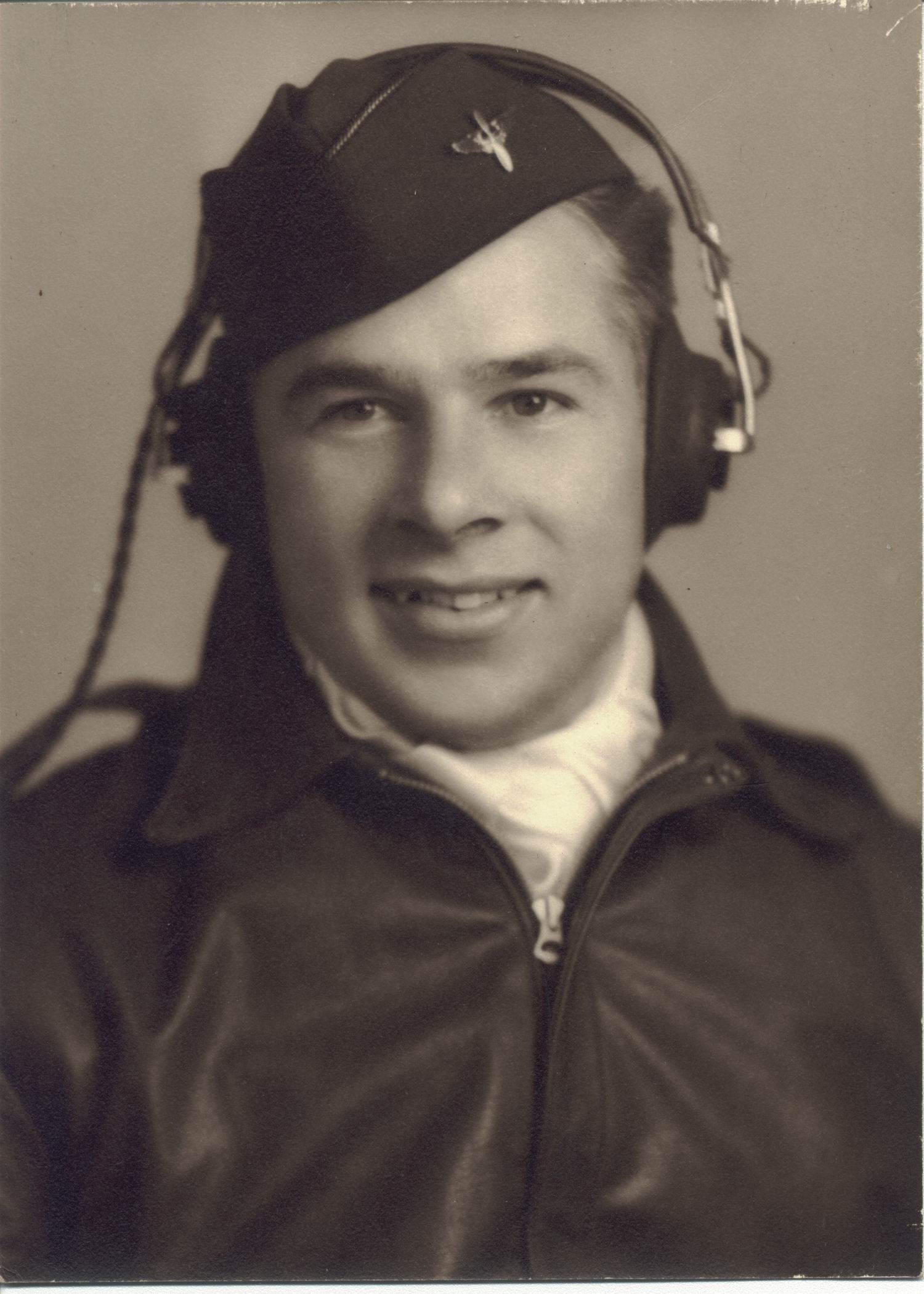
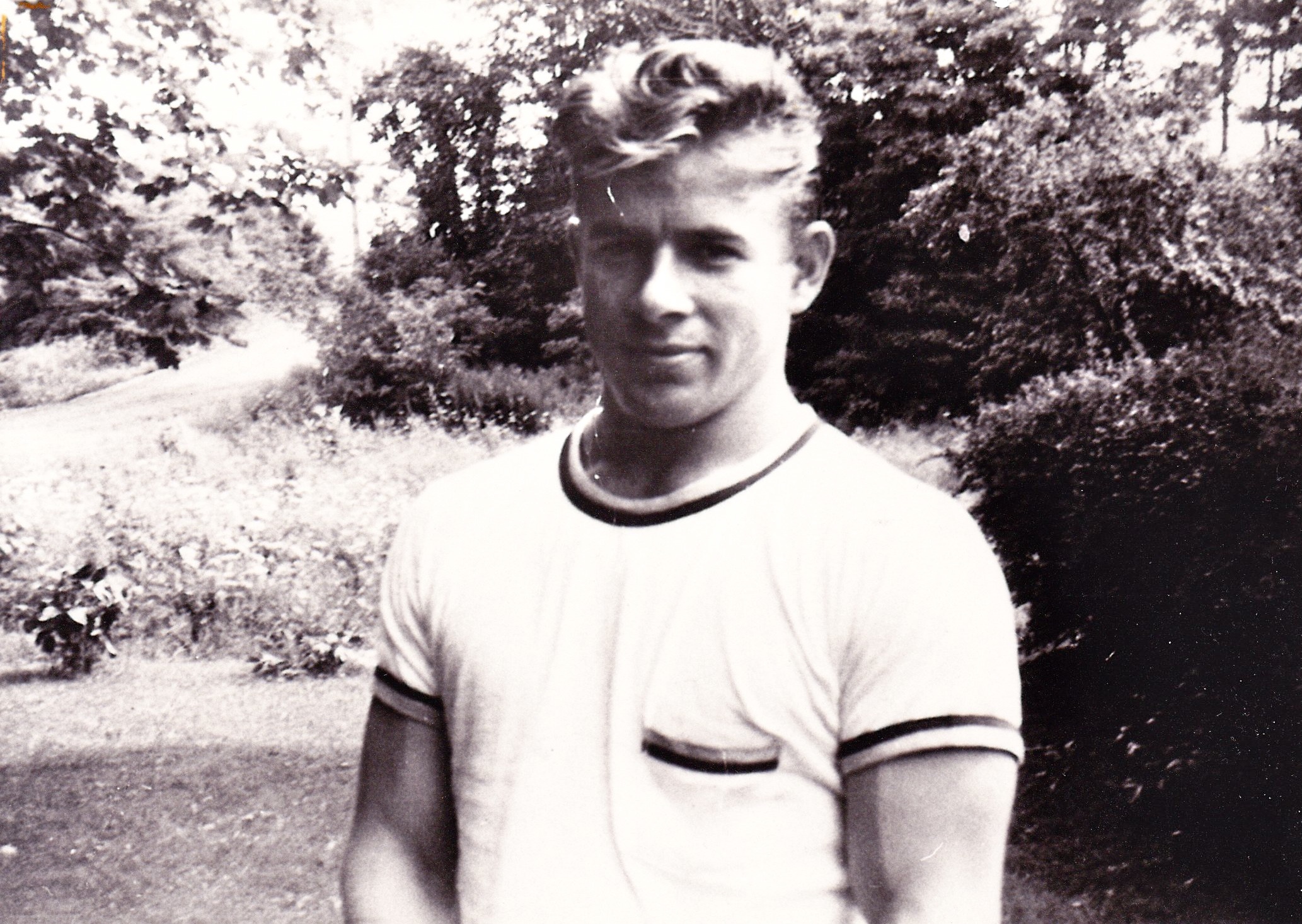
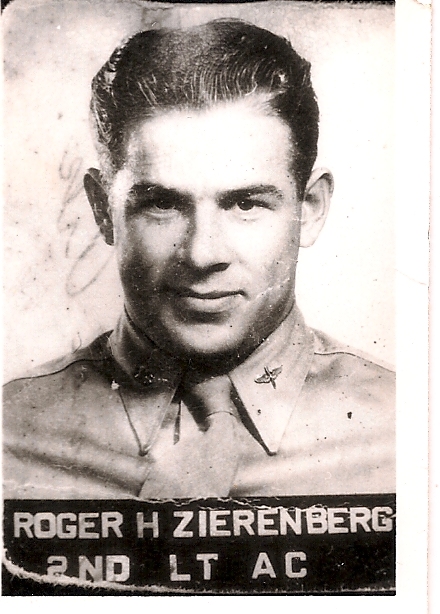
Roger Sr. in uniform. The same confidence his family remembered later in life was already visible in the young officer trusted with combat aircraft.
Timeline
- 1921Born 26 November in East Los Angeles. His birth took place in the mansion house at Evergreen Cemetery, where his father Herman served as superintendent. Two siblings before him had not survived infancy. Roger Sr. survived on goat's milk.
- 1920sGrew up on the cemetery grounds, then moved to Glendale at age 5. Childhood filled with sport, mischief, music, and the early development of athletic ability and mechanical curiosity.
- 1930sAttended Woodrow Wilson Junior High and later Whittier High School. Became first trumpet in a 60-piece band. Set a class B pole vault record of 11'–3". Developed as a competitive diver and sprinter. Hot rods consumed much of his free time.
- 1939Graduated from Whittier High School. Played a trumpet solo with the band at graduation. That same year, his father disappeared — Roger Sr. and his brothers quietly ran the cemetery through the summer before being let go.
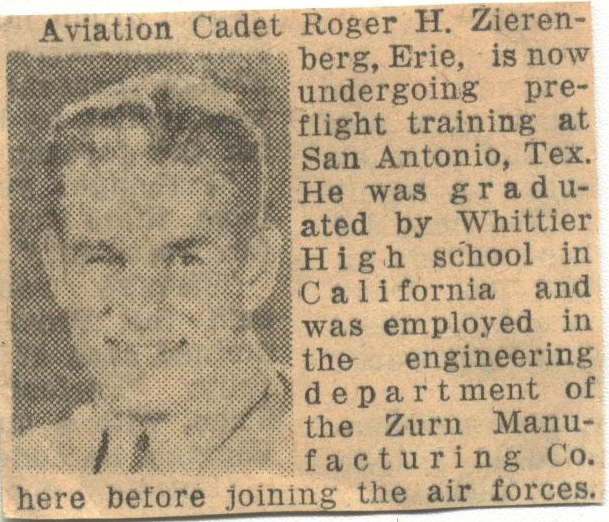
- 1940–41Worked at Zurn Manufacturing Company in Erie, Pennsylvania — starting in the shipping room, surviving the brass foundry, and eventually landing in the engineering department as a draftsman.
- 1942Married Juanita Wilma King in Erie, Pennsylvania on 28 November. Soon after, entered military service. Their daughter Bethy was born during the war years.
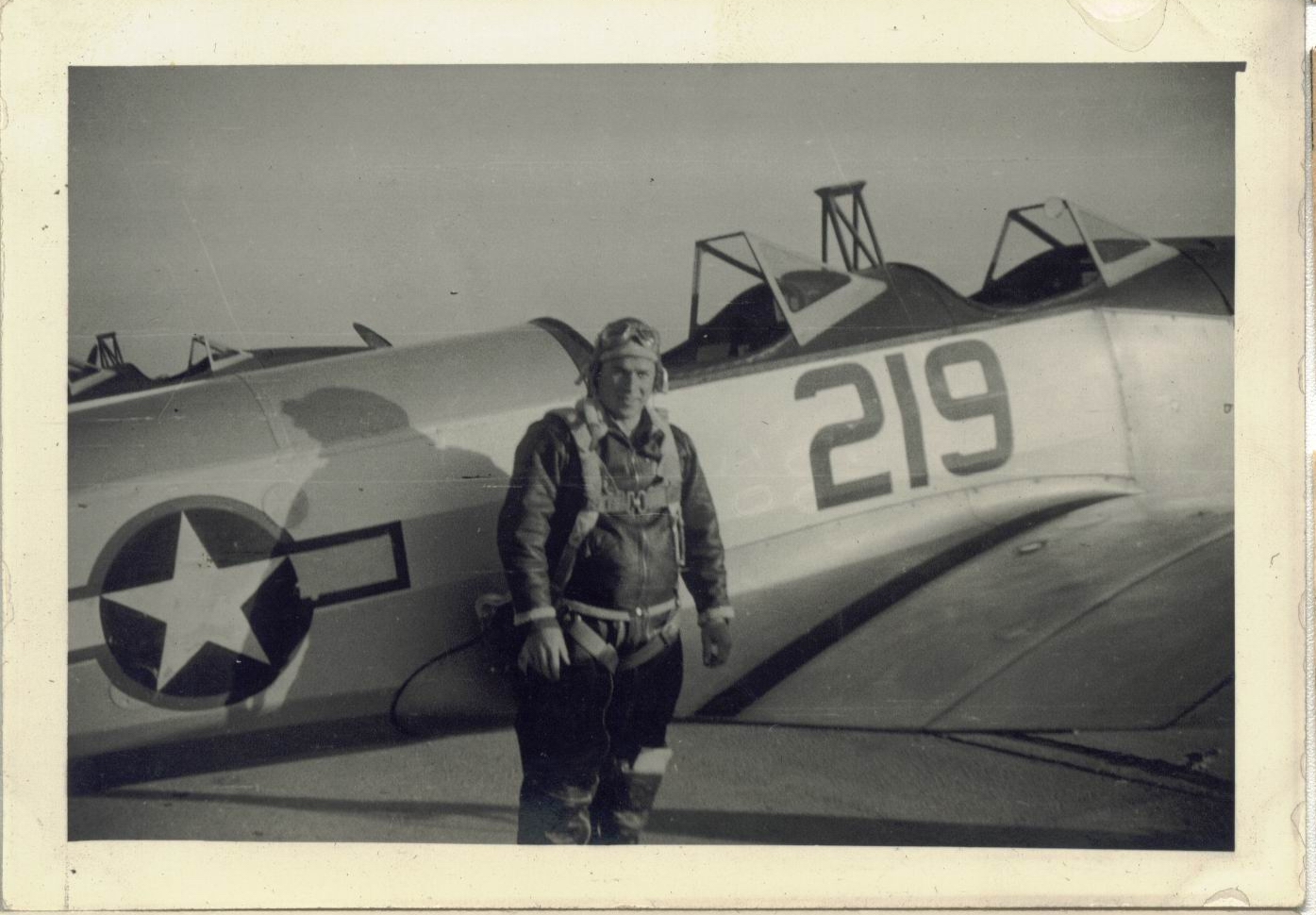
- 1943Completed aviation training. Selected for fighters after writing on his questionnaire that he wanted to fly "something hot and fast." Trained on the P-40 before transitioning to the P-51 Mustang.
- 1944Flew 60 combat missions with the 309th Fighter Squadron, 31st Fighter Group, 15th Air Force, based at San Severo, Italy. Shot down 4 confirmed enemy aircraft. Awarded the Distinguished Flying Cross and Silver Star. Named his P-51 Bad Penny II.
- PostwarReturned home to Juanita and built a civilian life. Worked as a draftsman, manufacturer representative, businessman, teacher, and entrepreneur. Continued to play trumpet, build hot rods, dive, and tell stories.
- 1995Attended the 309th Squadron reunion in Dayton, Ohio. A fellow veteran wrote about Roger Sr. in the 1997 issue of Memories: The Flight Community Forum, with his P-51 on the cover.
- 2014Roger Herman Zierenberg, Sr. passed away on October 7, 2014 in Moorpark, Ventura, California. He was 92 years old. He had set a goal to reach 90 and surpassed it. He was laid to rest in Newhall, Los Angeles, alongside Juanita. His eulogy was written and delivered by his grandson Rod Zierenberg.
Military Experience
Roger Sr.'s military service was one chapter in a much larger life — but it is impossible to tell his story without understanding the scale of what he did as a combat fighter pilot.
Training
He passed every test, wrote that he wanted to fly "something hot and fast," and was selected for high-performance fighters over bombers and transports.
Aircraft
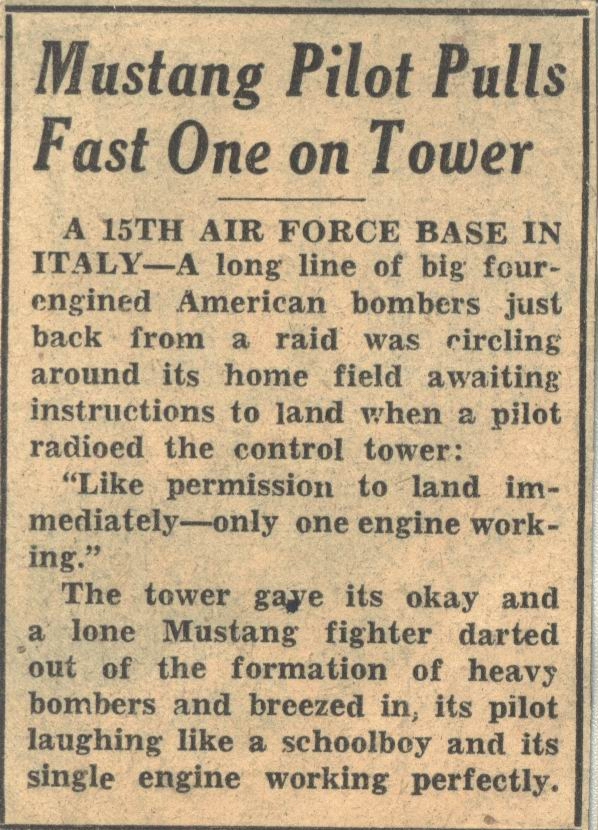
He flew the P-40, then the P-51 Mustang. He was the first in his group to transition to the Mustang. "It fit me like an old shoe," he said — high praise for a 437-mph fighter.
Combat
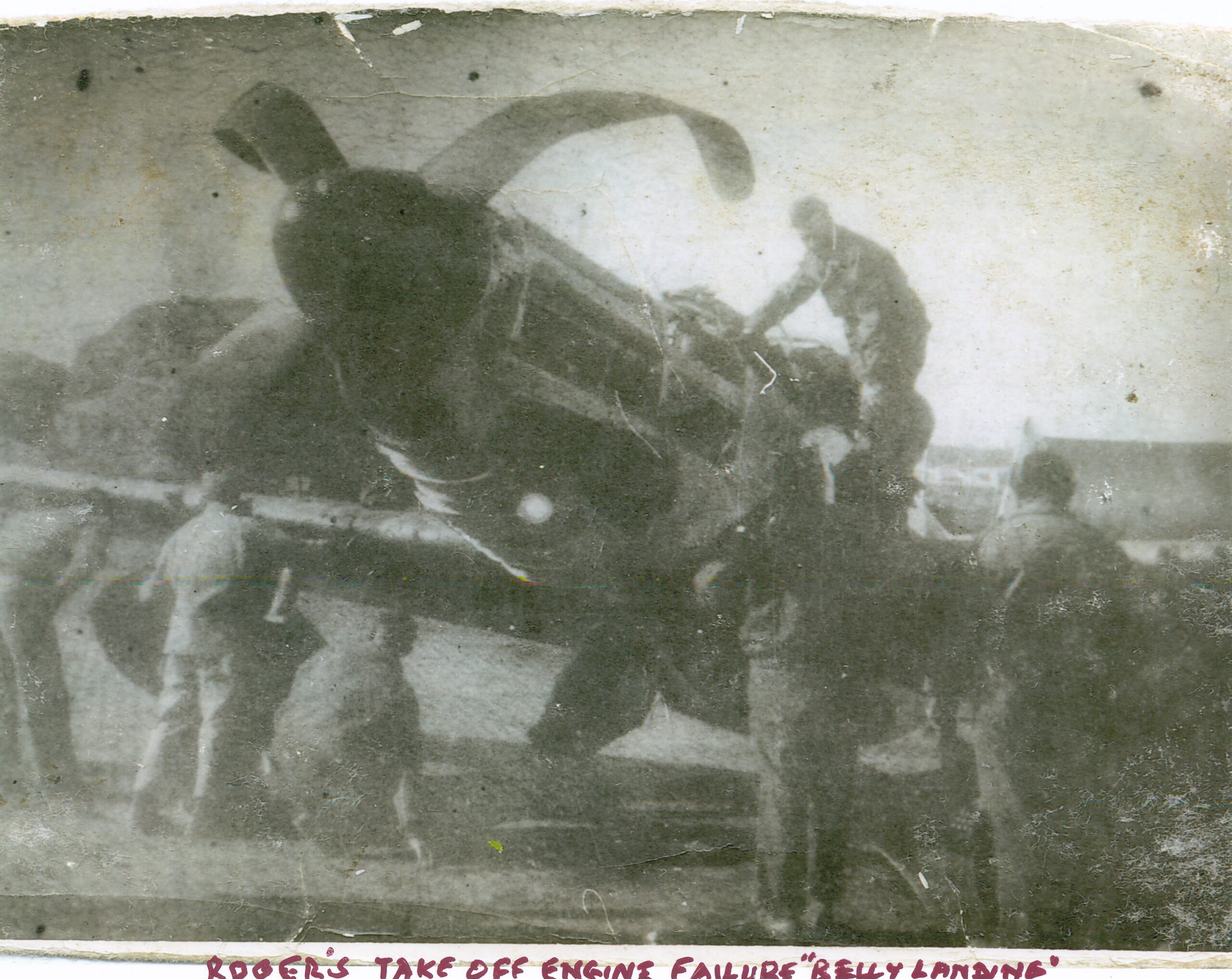
60 missions over Italy, North Africa, Romania, and Germany. 4 confirmed aerial victories. 1 aircraft damaged. Emergency belly landing at San Severo. Flak through the wingtip. He came home.
He came home from war and built a life.
Roger Sr. did not remain only a fighter pilot in an old photograph. He became a husband, father, grandfather, businessman, teacher, storyteller, and example to the people who knew him best. His courage in the air was matched by his ambition and humor on the ground.
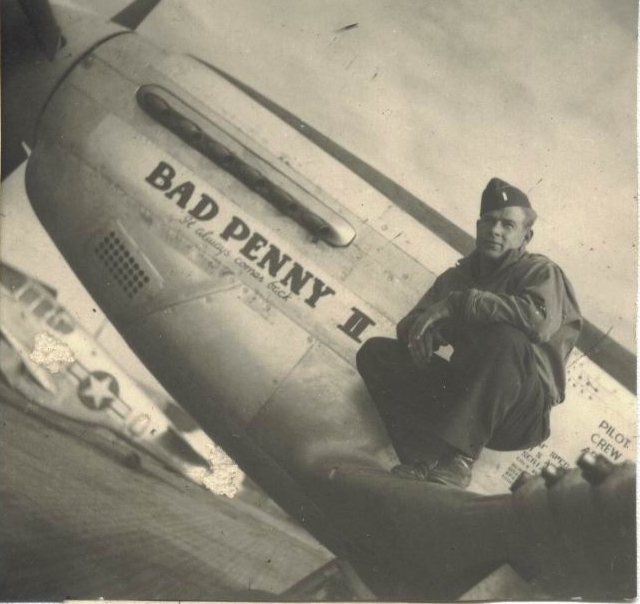
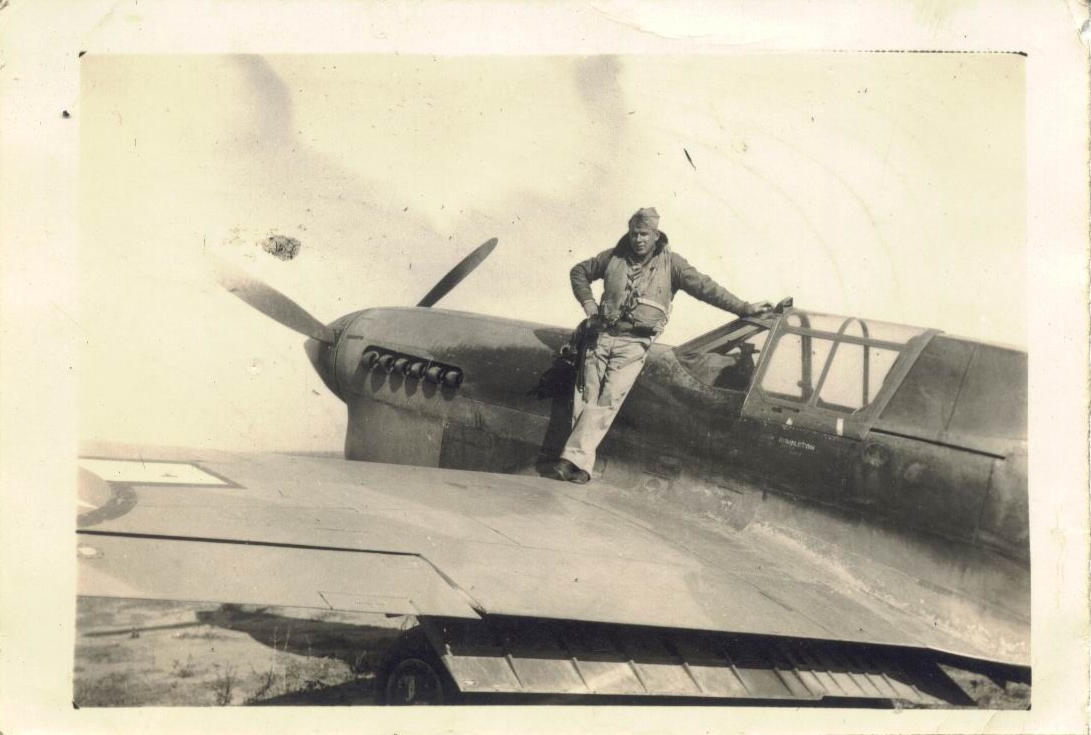
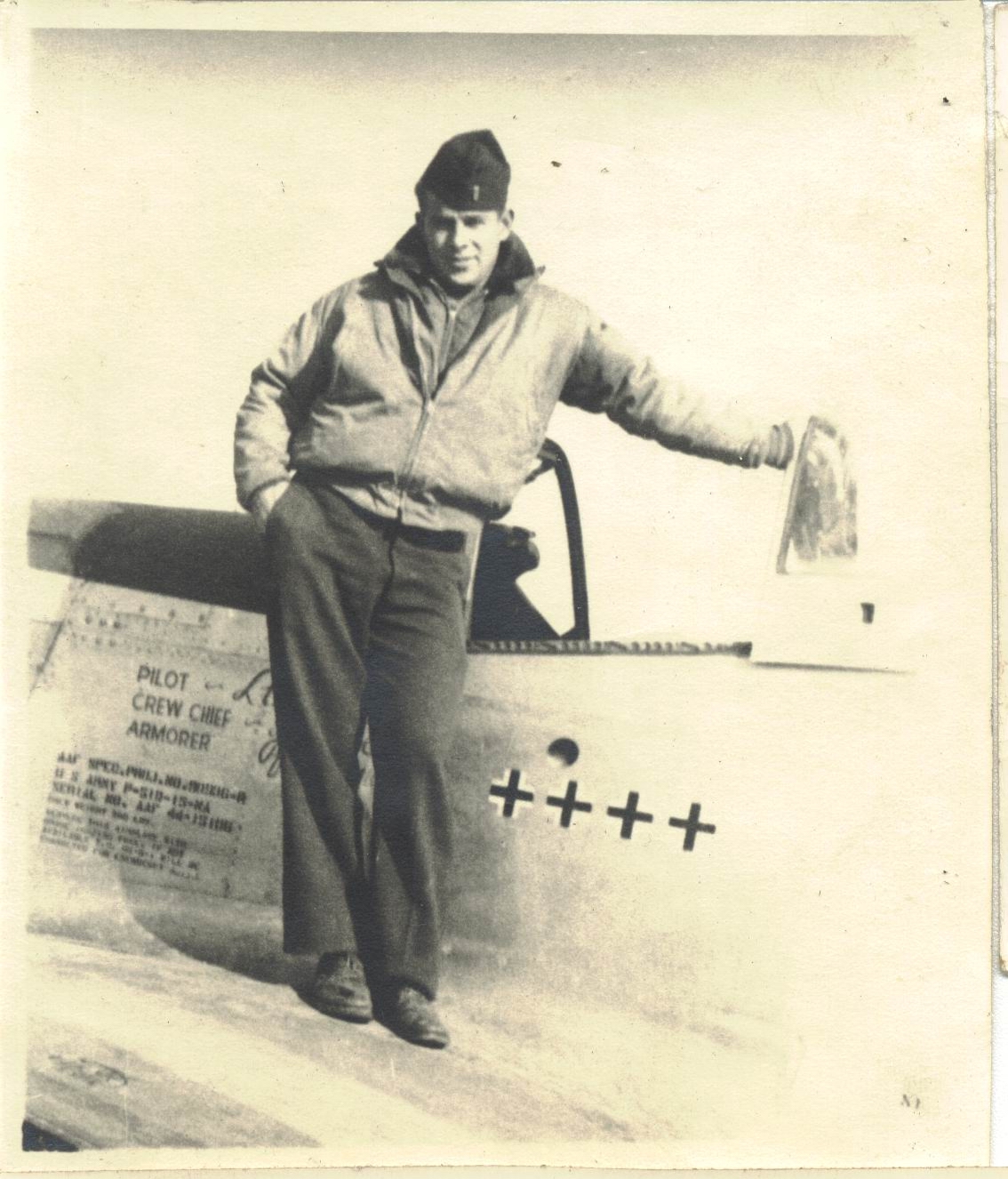
Roger Sr. sitting on the nose of Bad Penny II. The inscription below the name reads: "It always comes back."
Bad Penny II
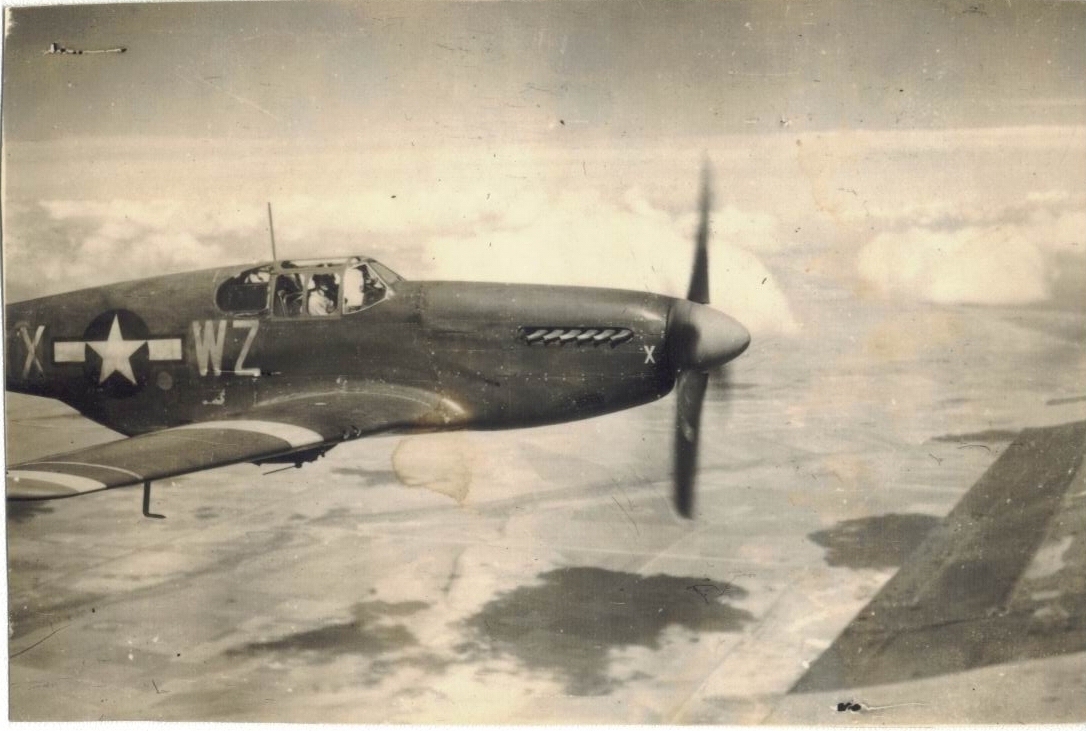
Roger Sr. named his P-51 Mustang Bad Penny II — from the old saying that a bad penny always comes back. The name was personal and fitting. He went out. He fought. He came back.
The aircraft was distinctive on the San Severo strip: the only Mustang fitted with two Spitfire mirrors, screenholes drilled into the back. When Roger Sr. came in for a landing — usually with a showman's peel-up, lowering his gear while inverted — there was no mistaking whose airplane it was.
The kill markings on the fuselage were not decorations. They represented four aerial encounters with enemy aircraft — four Messerschmitts and a Junkers transport — brought down by his guns and his judgment.
Juanita Wilma King — His Wife
June 25, 1923 – January 7, 2013 · Born Erie, Pennsylvania · Daughter of Lester W. King & Eunice King (née Reid)
Behind every mission Roger Sr. flew, there was Juanita. They married on 28 November 1942 in Erie, Pennsylvania — just weeks before he left for military training. They were married for 70 years and raised six children together.
Roger Sr. and Juanita met as teenagers in Pennsylvania — he was 19, she was 16, and they lived just down the street from each other. They went skating, spent all their time together. When the war came and Roger Sr. knew he would have to go, he proposed. She said yes. They married quickly. Two months later, in the middle of the night, he had to leave to catch a train to Pittsburgh to get his uniform. He called it "the saddest day of my life."
During the war, Juanita drove their daughter Bethy — five months old — from Waco, Texas to Roger Sr.'s base on Christmas Day in a sea-foam green 1938 Plymouth convertible. The horn played "Mary Had a Little Lamb." Roger Sr. ran downstairs to meet them.
After the war, Roger Sr. and Juanita joined the Church of Jesus Christ of Latter-day Saints together, and were sealed in the Salt Lake Temple. They raised six children, accumulated 34 grandchildren, and built a life that Roger Sr. said he never regretted for a single day.
Juanita passed away on January 7, 2013 — about 18 months before Roger Sr. In his final years, he said the person he most looked forward to seeing on the other side was Juanita. He said he loved her and missed her deeply.
Their grave marker at Newhall, California reads: "Sealed in the Salt Lake Temple. Together Forever. Always in Our Hearts."

⬆ Replace src above with the actual gravestone photo URL once uploaded to the site
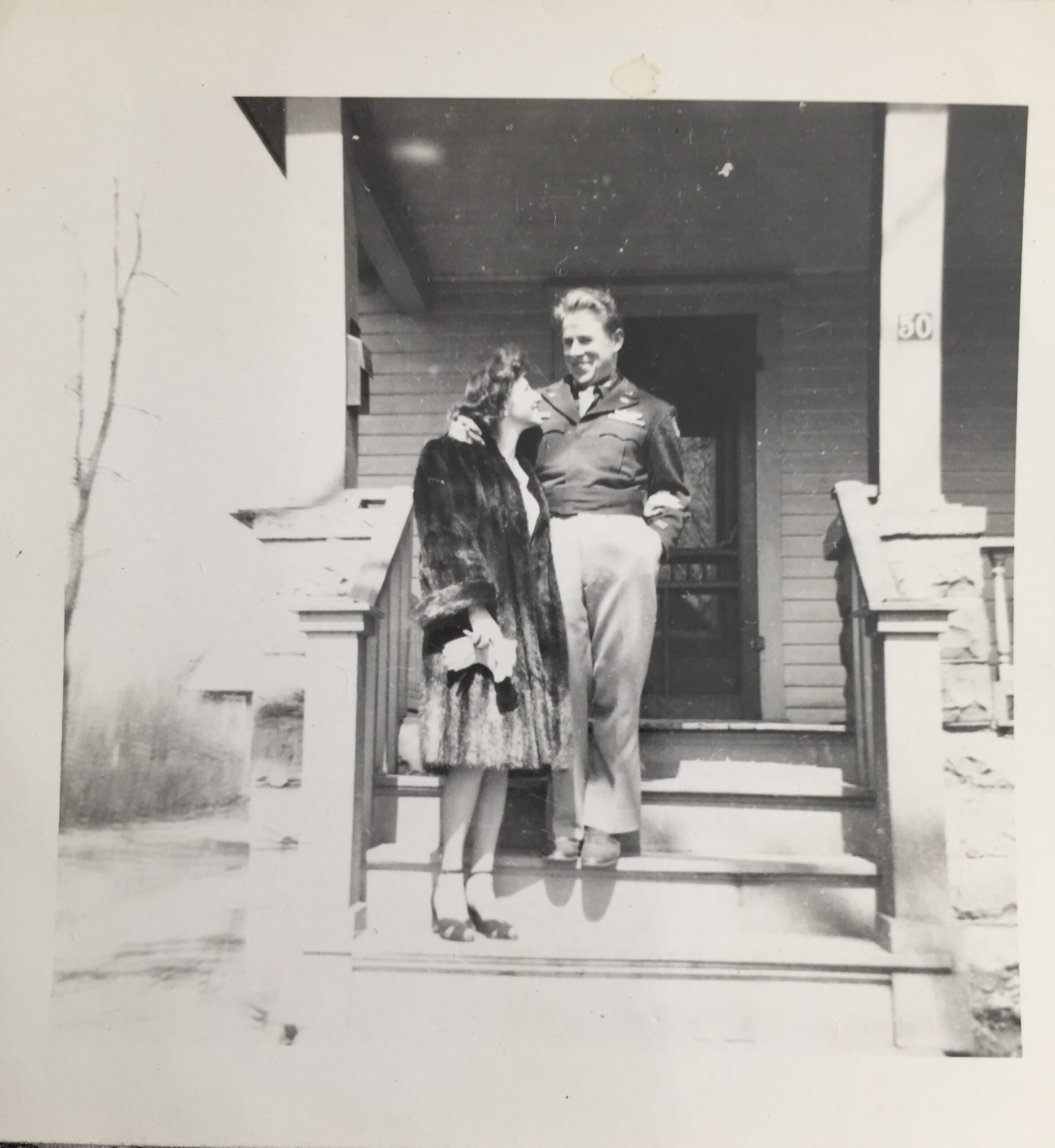
Roger Sr. with Juanita — the life he came home to build. Married November 28, 1942. Together for 70 years.
Primary Documents

Marriage License Application — November 23, 1942. Roger age 20, Juanita age 19. Married November 28, 1942 in Erie, PA by Minister E.M. Gearhart.

WWII Draft Registration Card — February 16, 1942. Roger listed his employer as J.A. Zurn Mfg. Co., Erie, PA. His mother Ruth as emergency contact.
📎 To display the actual documents: upload the scanned images to your WordPress media library and replace the placeholder src attributes above with the uploaded image URLs.
His Father: Ernst "Herman" Zierenberg
To understand Roger Sr., you have to know something about his father — one of the most remarkable characters in the Zierenberg family history.
Ernst Erich Hermann Zierenberg was born on 26 November 1882 in Gevelsberg, Westphalia, Germany — the same birthdate as his son Roger Sr., born exactly 39 years later. He died 27 October 1947 in Erie, Pennsylvania, at 65.
At 17, Herman joined the German Navy, endured brutal military discipline, and eventually jumped ship in a German port onto an outgoing tramp steamer. He sailed around the world seven times, boxed in South America as "Kid Belmont" (the French translation of "beautiful mountain," which is what Zierenberg means), spoke six languages, served as a swimming and language instructor at the YMCA in New York, and eventually made his way west — getting off a train in Northeast Pennsylvania when he became ill, meeting Ruth Ricart, and never leaving.
His influence on Roger Sr. was deep: the work ethic, the physical toughness, the confidence, the music. Herman was also a gifted singer, studied under the noted Paul Reimers, and was acquainted with Hugh Friedhofer — who later wrote the musical score for The Ten Commandments.
A dedicated page for Herman Zierenberg is in progress.
Herman Zierenberg — Key Facts
Born
26 Nov 1882 · Gevelsberg, Westphalia, Germany
Died
27 Oct 1947 · Erie, Pennsylvania
Boxing Name
"Kid Belmont" / "The Dutch Kid" — Panama and South America
Languages
Spoke six languages. Taught language at the YMCA in New York City.
Name Meaning
"Zierenberg" = "beautiful or decorated mountain" in German
Music
Gifted singer. Studied under Paul Reimers. Acquainted with Hugh Friedhofer (Ten Commandments composer).
Videos
Two recordings that bring Roger Sr. to life — one showing him at the piano, the other a memorial tribute assembled by his family.
Gramp at the Piano — Roger Sr. playing by ear, the same way he played trumpet his whole life. No sheet music. Just music.
Roger Herman Zierenberg Sr. Memorial — A tribute video celebrating his life, service, and legacy.
Photographs & Clippings
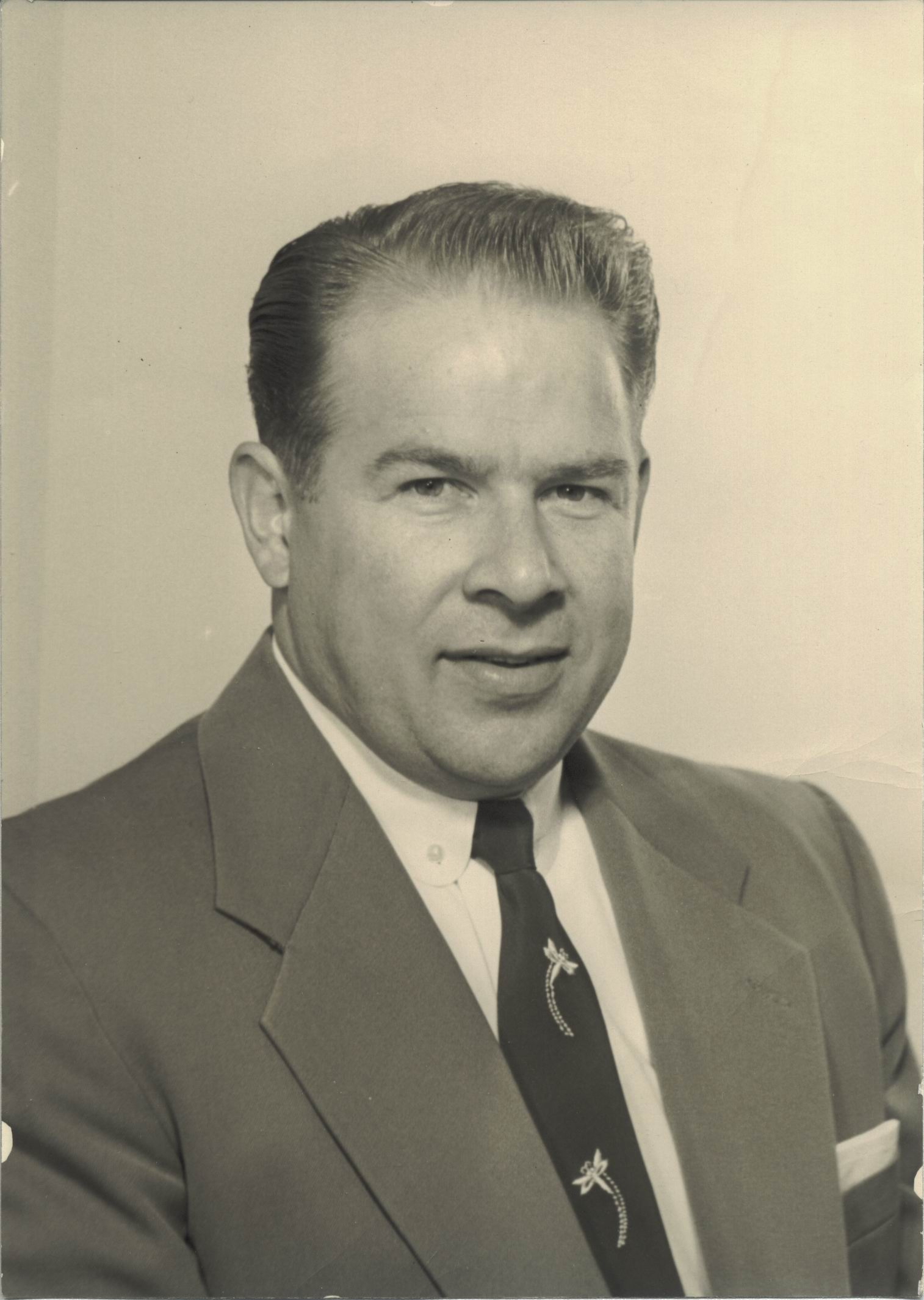
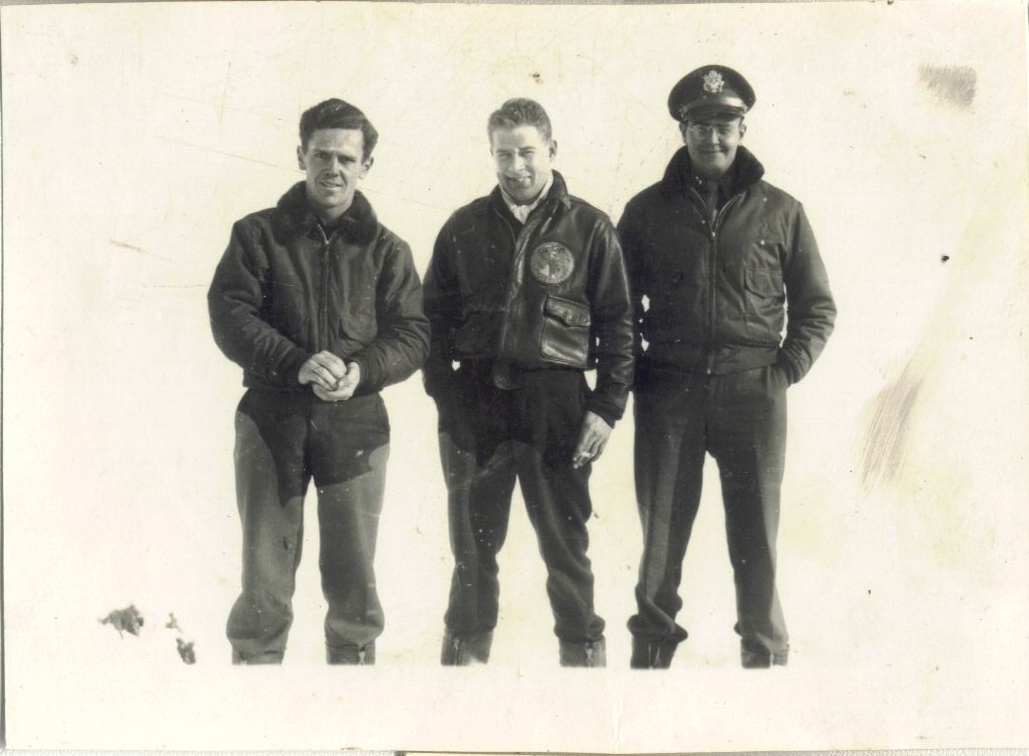
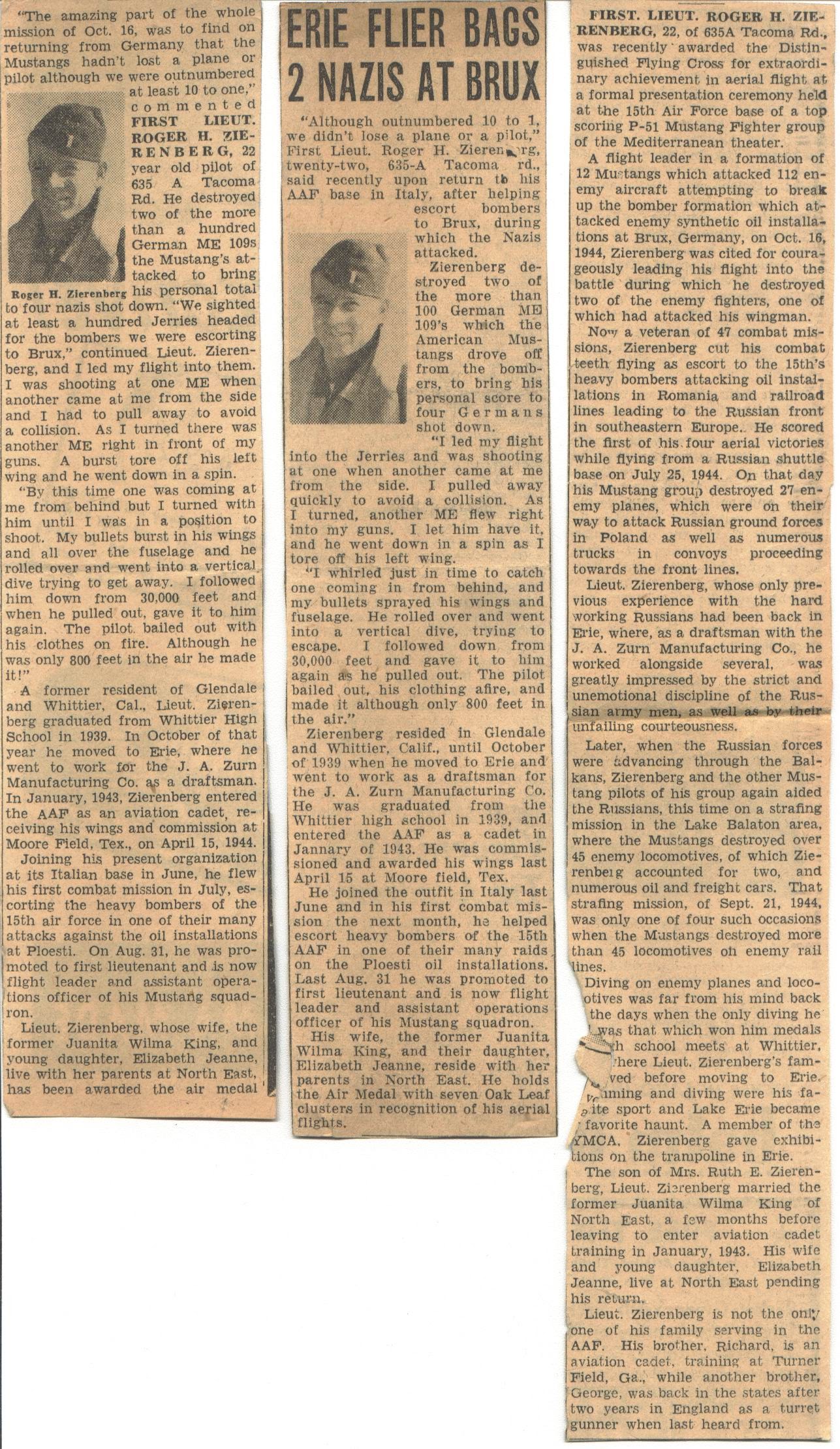
Click any photograph to open the full-size image in a new window. These images span Roger Sr.'s life — from the young cadet to the combat veteran to the family man.
From the Interview
Rod Zierenberg interviewed Roger Sr. in North Hills, California. These exchanges preserve Roger Sr.'s own voice.
Rod: Can you tell me about your birth?
Roger Sr.: I was born in East Los Angeles City in Evergreen Cemetery. My dad was the superintendent of the cemetery and we had a house on the property.
Rod: Why were you the first child to survive?
Roger Sr.: They were allergic to my mother's milk. I survived on goat's milk.
Rod: What were your interests growing up?
Roger Sr.: Sports, hot rods, and trumpet. High jump, relay team, and later solo trumpet in a 60-piece band.
His Own Words About Flying
Roger Sr.: On the questionnaire they asked if we wanted to be a bomber pilot, navigator, or fighter pilot. I wrote that I wanted to fly something hot and fast. Only four of us asked for that, and they gave it to me.
Roger Sr.: My Mustang P-51 was called "Bad Penny II." The saying is that a bad penny always comes back.
Roger Sr.: Five of us arrived at San Severo, Italy. I was the first of our group to fly the P-51 and it fit me like an old shoe.
Full Family Biography
The complete personal history of Roger Herman Zierenberg, Sr. — in his own words and his family's words. Expand any section to read the full account.
Childhood & Early Life — Evergreen Cemetery to Glendale (1921–1937)
Roger Herman Zierenberg, Sr. was born on November 26, 1921, in the mansion house at Evergreen Cemetery in East Los Angeles — his father Herman was the superintendent. His older sister Hermine Elizabeth and brother Norman Eric had both died as infants. Roger himself nearly died from severe lactose intolerance, surviving only after his mother Ruth discovered that goat's milk overcame the problem.
His younger brothers George Jackson (born April 28, 1923) and Richard Dudley (born April 20, 1926) completed the Zierenberg boys.
Life at Evergreen was unusual and free. The brothers ran through blue-bells and California poppies, played over the manure pit on planks, sailed boats in the carpenter shop, and ate strudel from the old German carpenter's kitchen. Christmas brought an extraordinary gift: Roger Sr. received a convertible pedal car with lights, a wind-up motor sound, and a horn. He was, he recalled, "the rich kid of the area."
At age 5, the family moved to Glendale — their house smaller than the cemetery mansion, but a wonderful playground. Cowboys and Indians, a pole vault and high jump pit, model airplanes, rubber-band guns, raided fruit trees, and constant competition with his brothers defined those years. Roger Sr. learned to swim when his father abandoned him in the deep end of the Fremont Park pool and shouted encouragement from the edge. He made it. Then he went straight to the diving board.
His father Herman invested in a La Vida Water Company franchise and delivered bottled water — including to the then-famous Walt Disney. The family took Saturday trips to Santa Monica and Huntington Beach on the "Big Red Cars" streetcars, with picnic lunches packed in a wicker basket and a gallon of lemonade in a thermos.
Roger Sr. developed a paper route, then a lawn-mowing business. He mowed for 25 cents, simonized a Model A for 75 cents (waxing every spoke), and saved for a bicycle — which was promptly stolen from the school rack. He discovered hot rods. He discovered trumpet. He never fully recovered from either.
At John Muir Grammar School he excelled in chinning, standing broad jump, and swinging rings — but couldn't throw a baseball through a rectangular frame to earn his medal. He remembered the lesson: "No matter how well many things are done, one lapse can cause a loss of the ultimate goal."
In 1937, his Junior year, the family moved to Norwalk when Herman was appointed superintendent of a cemetery there. Roger Sr. sometimes dug graves before getting on the school bus. He became first trumpet out of 17 trumpets and student leader in the Whittier High School band, and was listed in the school annual as "Music Maker." He graduated in 1939, playing a trumpet solo at the ceremony.
The Trumpet — A Lifelong Love
The trumpet story runs through Roger Sr.'s entire early life. It started when he borrowed a friend's bugle and discovered he could immediately play it — bugle calls, by ear, with no training. His neighbors were not entirely pleased.
He desperately wanted a trumpet. The school instrument program gave him a cello. Oom-pah-pah for a year. Then a French Horn. Oom-pah-pah again. His father brought home a ruined, sticky-valved cornet someone had discarded. Too far gone to play.
His best friend Bobby Bedford was an excellent trumpet player, and Roger Sr. hung around him partly out of admiration, partly out of envy. One assembly, a fellow student played "On the Road to Mandalay" and gave Roger Sr. goosebumps he never forgot.
The breakthrough came when his mother lost her car keys and in desperation promised: "Roger, if you find those keys, I'll buy you a trumpet!" He found the keys. She kept her promise. A brand new $35.00 Regent trumpet — which he still had decades later, though it had been redone three times, polished so thin it had exceptional tone.
He played trumpet by ear. No sheet music. He heard a melody and he played it. He became first trumpet in a 60-piece band. He played a solo at graduation. And after the war, back home with Juanita and his children, the trumpet still filled the house.
That trumpet rests today in his shadow box alongside his combat medals and pilot wings. That placement was not accidental.
The War Years — Training, Combat, and Coming Home (1942–1945)
Roger Sr. entered military aviation training in 1943. When the questionnaire asked what type of aircraft he hoped to fly, he wrote: "Something hot and fast." Only four cadets answered that way. The military gave it to him.
He trained on the P-40 before transitioning to the P-51 Mustang. He arrived at San Severo, Italy with four other pilots. He was the first to fly the P-51, and it fit him, he said, "like an old shoe." His squadron called him Roger the Rock — in practice dogfights, no one had ever beaten him.
He named his P-51 Bad Penny II. The old saying: a bad penny always comes back. He went out 60 times. He came back 60 times.
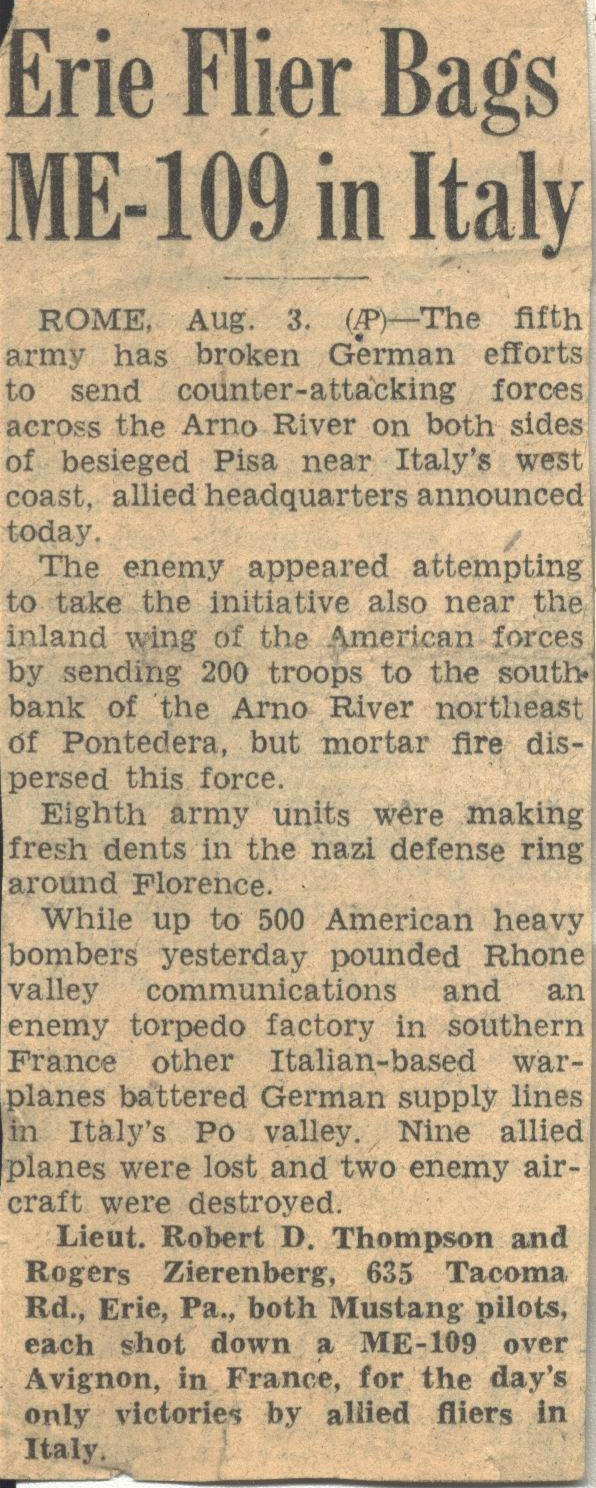
His combat record included his first aerial victory on July 25, 1944 — a Junkers Ju 52 transport shot down during a shuttle mission to Russia. His second came over Avignon, France, on August 2, 1944 — a Messerschmitt Me 109. On October 16, 1944, he shot down two more Me 109s in a single engagement. For that mission, he was awarded the Distinguished Flying Cross. He also received the Silver Star.
He flew through the Ploesti raids — among the most dangerous missions of the entire war — and took flak through his wingtip on his sixth mission. He survived an engine failure on takeoff that resulted in a belly landing; he rolled off the end of the runway into dust and sage brush. His first thought afterward was that he'd missed his chance to bail out, and he wondered what it would have felt like. That was Roger Sr.
During the war, Juanita drove their daughter Bethy — five months old — from Waco, Texas to his base on Christmas Day. The car horn played "Mary Had a Little Lamb." Roger Sr. ran downstairs and was confronted by a cranky infant who had been traveling all day. He wrote it all down in his memoir, Woodbine Five-Nine — the car, the baby, the smell, the kindness of a stranger who offered her home to a young mother thanking her so many times Roger Sr. had to take Juanita by the arm and lead her away.
Postwar Life — Career, Family, and Who He Became
Roger Sr. came home from the war and built a life — which may be one of the most important parts of his story. He did not remain only a fighter pilot in a photograph. He became a husband, father, businessman, teacher, and grandfather.
He worked as a draftsman — his skill in mechanical drawing, noticed back at the Zurn Manufacturing Company in Erie, had not left him. He later became a manufacturer representative and entrepreneur, with the same confidence and drive that had served him in the cockpit.
He coached. He taught. He restored cars. He competed in stock car racing. He dove competitively. He told stories. His children marveled that he seemed able to do anything.
His son Roger Jr. remembered: "Dad was our hero, but he never seemed to overdo his characterization of being that to us. We just marveled at his bravery, his courage, and his ability to remain composed in the face of difficult circumstances and challenges. These were traits to be respected, and to be emulated."
He began writing a memoir he called Woodbine Five-Nine — his radio call sign in the skies over Italy and Germany. Thirty pages survive, vivid and honest and funny, written in first person under the pen name "Herman Belmont." He never finished it. But what exists is irreplaceable: the closest anyone will come to sitting in the cockpit of Bad Penny II with Roger Sr. himself.
In 1995, he attended the 309th Squadron reunion in Dayton, Ohio. A fellow veteran wrote about him in the August 1997 issue of Memories: The Flight Community Forum. Roger Sr.'s P-51 was on the cover — an air-to-air photograph taken during a live combat mission in 1944 by a fellow pilot who was right there with him.
Roger Herman Zierenberg, Sr. died in 2014. He left behind a family whose members are still telling his story.
His Father Herman — The Full Story
Ernst Erich Hermann Zierenberg was born on November 26, 1882 in Gevelsberg, Westphalia, Germany — the same birthdate as his son Roger, born exactly 39 years later. He died October 27, 1947 in Erie, Pennsylvania.
Herman's life reads like a novel. At 17, he joined the German Navy and endured notoriously cruel military discipline. This climaxed in a German port where he jumped ship onto an outgoing tramp steamer. He claimed to have sailed around the world seven times, never returning to Germany.
He boxed in South America — in Panama and elsewhere — using the name "Kid Belmont" or "The Dutch Kid." The name Zierenberg was difficult for Panamanian fans to say, so he took the French version: Belle Mont — beautiful mountain. He was beaten badly by a large Canadian, suffered a broken nose he carried the rest of his life, and quit boxing.
While in South America he contracted a terrible fever after a fight, curled up in a roadside ditch, and lay there "like a sick dog" for several days before recovering. He eventually made his way to New York City, where he became a swimming and language instructor at the YMCA, speaking six languages.
He traveled west by train, became severely ill, and got off in Northeast, Pennsylvania — only a few miles from where Ruth Ricart lived. They met, fell in love, and married despite her family's objections (the war with Germany was still fresh in everyone's memory). They opened a candy store in Jamestown, New York. They worked in a cemetery there. Then they moved to Southern California, first to a prefabricated house on 40 acres in the Mojave Desert, then to Evergreen Cemetery in East Los Angeles when Herman was hired as superintendent.
Herman was, by Roger Sr.'s account, extremely generous — "he would give you the shirt off his back." He was a gifted singer who studied under noted instructor Paul Reimers. He was acquainted with Hugh Friedhofer, who later composed the score for The Ten Commandments. He taught Roger Sr. to swim by abandoning him in the deep end and shouting instructions from the poolside.
He also struggled with alcohol, which eventually cost him the Evergreen position and led to years of absence from the family. Roger Sr. recorded all of this honestly in his personal history — the man's extraordinary qualities alongside his failures, with the fairness of a son who understood both.
Woodbine Five-Nine — His Unfinished Memoir
Roger Sr. began writing a memoir after the war. He titled it Woodbine Five-Nine — his radio call sign in the skies over Italy and Germany. He wrote it in first person under the pen name "Herman Belmont," with his protagonist called "Roger Revelle." But the details are too specific, too personal, and too true to be anything other than autobiography.
Thirty pages survive across four chapters. The manuscript was never finished. Chapter Four ends mid-sentence.
What exists is remarkable. Chapter One opens not with combat, but with Roger Sr. stalking a chicken through an abandoned Italian monastery, cornering it with his jacket, putting it in a cage, and announcing: "You, little friend, won't look so haughty when you're belly-up on the mess table." They ate it by Zippo lighter when the generator went out. It was great.
Chapter Two includes the story of Juanita driving baby Bethy to his base on Christmas Day, the Plymouth horn playing "Mary Had a Little Lamb," the cranky infant, no room to stay, and the kindness of a stranger named Mrs. Babson who called Travellers Aid to offer her home.
Chapter Three describes a genuine, deadly aerial feud between American P-51 and P-38 pilots that killed at least four men — a story no official record would likely preserve.
Chapter Four is the most purely military — escorting bombers into Munich with 600 German anti-aircraft guns waiting, watching two bombers become fireballs, writing: "I hope they all get out. No chutes. That one blew too hard."
The manuscript ends with Roger Sr.'s mind drifting from the Munich flak to his courtship with Juanita, then outlining what the final chapters were meant to cover: the eleven-left fight, Lt. Harwood on his wing, the missing engine, being listed as Missing in Action, and taking a drink of whiskey at the end. He never wrote those chapters.
But thirty pages exist, typed in his hand, preserved by his family. They are the closest anyone will ever come to sitting in the cockpit of Bad Penny II with Roger Sr.
Eulogy
Written and delivered by Rodrick Zierenberg, grandson of Roger Sr., at his memorial service.
In the year 1918 a young man named Herman Zierenberg, a German immigrant, married a choirgirl named Ruth Richart. They began their lives in Erie, PA. Sadly their first two children died shortly after birth. The two moved to California to start a new life in the sun and warm weather. Herman became the superintendent of the Evergreen Cemetery in Los Angeles while Ruth worked in the office. Soon Ruth was pregnant again and their hopes and dreams hinged on the survival of this little child.
On November 26, 1921, Ruth gave birth to a baby boy and they named him Roger Herman Zierenberg. Little Roger had a voracious appetite but soon began to develop the same symptoms that his older siblings had. However, somehow, by divine providence, it was suggested that they feed him goat's milk, and he improved immediately and began to thrive.
Growing up on the cemetery grounds, Roger and his two younger brothers, George and Richard, enjoyed the lush green grass and trees, and the freedom to roam the 67 acres. As they grew older they worked hard on the landscape including digging the graves for burial. This vigorous labor helped Roger develop his strong muscular physique. He also did other odd jobs to earn extra money by mowing lawns and delivering the Glendale News Press.
Roger was a very coordinated and able young man. He loved to play all kinds of sports. He excelled in school competitions and meets. He was first in the chinning, standing broad jump, and took second in the 50-yard dash. Later he pole-vaulted and did the high jump. He was on the relay team and loved to play football with the neighborhood kids. Another activity which he participated in was marbles — however, he says, he usually came home a loser with empty pockets.
Roger was also a gifted musician. Although he had no formal training he was a natural. Both his parents loved music and sang in the choir. Ruthie played the piano. And they encouraged music in the family. One day, Roger heard a trumpet solo in the school auditorium. He said it thrilled him so much that he just had to learn to play the trumpet. He applied for the school band and they gave him a French horn to play. Not quite, he thought, but it was good training. He borrowed an old bugle from a friend, but still — not the same. Herman, his father, bought him an old "run over" looking trumpet that was on its last leg. Closer, but not good enough. Then one day his mother Ruth misplaced her keys and she in desperation promised him a new trumpet if he could find them — and of course — he did! Finally he had his trumpet and he played, and practiced with it, and excelled at it. He loved to entertain. I even watched him play the piano with his left hand while holding the trumpet in his right — playing and blowing a song at the same time.
Roger and his family attended church in his youth. He found direction from a mentor named Reverend Ford. He participated in Sunday School and learned Bible verses.
As fate would have it, just down the street from where they settled in Pennsylvania happened to live three beautiful girls whose last name was King. Roger and Juanita being the oldest, paired up. They would go skating and do other fun things and were always together. After a few years, World War II began, and Roger knew that he would have to go to war, and that he might lose her if he didn't settle down and tie the knot. So one day he proposed to her and she said "yes." A couple of weeks later they were married. Roger was 21 and Nita 18. They lived together for about two months as a married couple, and then — as Roger put it — "the saddest day of my life was when I had to leave Juanita in the middle of the night and take a train to Pittsburgh to go get my uniform."
Next Roger was off to Basic Training. Roger was intelligent and in great condition and so he passed all of his tests with the highest degree of excellence. After basic training graduation they passed out a piece of paper asking how you wanted to serve in the war. He wrote down — "I want to fly something HOT and FAST." They started him out in the P-40 for training and he became quite proficient. Later his main airplane was the Mustang P-51 and oh how he loved that plane. "That airplane fits like an old shoe," he used to say.
Roger had no fear. He was fighting the Germans and flew into Europe and North Africa. His airplane, the Mustang P-51, he affectionately named "Bad Penny II." In those days there was an old saying that a bad penny always comes back to you — meaning his plane would always come back. Well, so is the story of Roger's life.
He was a 1st and 2nd lieutenant. Then he became a Captain. He flew 60 missions and shot down 5 enemy aircraft. He even crash landed a P-51 and walked away. Another P-51 he flew to the extreme limits, in a dogfight, and came out of it, with the plane running so poorly that he barely made it back to the base. He served our country valiantly and fearlessly for the cause of freedom.
Now, while Roger had been in High School he developed an interest in becoming a draftsman. His first job after High School he went to work for the Zurn Company. He was assigned to do menial tasks — counting parts and throwing them into a bin, all day long, for weeks — until finally one day he approached the management and asked if they needed anyone in the drafting room. "I'm a draftsman," he said. They said yes and the next day Roger showed up in a white shirt and tie. He worked hard at his designs and became one of the best in the field.
He left the company for a while and went to war, but when he came back, he just wasn't satisfied with being stuck in an office designing plumbing specs. He wanted to get out into the field as a salesman — and as he put it — "that's where the bucks were." Roger was very competitive. He had all of the competition fighting to bring him onto their side. Finally he decided to become his own independent company. So he got himself an office in New York and became the Roger Zierenberg Company and went to work representing a well-established manufacturer of engineered plumbing and drainage products. Later he moved Juanita and the children back to California and took a large territory doing the same thing.
In an effort to better himself and his skill at selling, he took the Dale Carnegie self-improvement and salesmanship course and it wasn't very long before he was teaching that course in the evenings.
Roger was very gregarious. He quickly and easily made friends. He was able to make you feel important and he loved to find things to compliment you about. He always told us we were special and somehow that you were his favorite.
One day while Roger was at work, Juanita let a couple of young Mormon Missionaries into their home. When Roger came home and she told him he said — "Well, what difference is that going to make in my life?" Little did he know the impact that difference was going to make. After some time of studying and prayer with the Elders, Roger and Juanita joined the Church of Jesus Christ of Latter-day Saints. In his final years, Roger said: "It certainly has made a wonderful change in my life, and I have never regretted at any time that I have been involved in the LDS or Mormon Church."
Roger had a passion for fast cars. He loved hot rods and liked to talk about the loud mufflers, fender skirts and lowered rear ends. He'd build hot rods with chopped tops, channeled bodies and tuck-rolled upholstery. One of his favorite things to do was burn rubber. After retirement with more time, he kept busy buying, fixing up and selling vintage Ford Mustangs. He was known in the car community as "Roger Mustang." He loved fast planes, fast cars, and fast motorcycles. He said he used to dream about racing his cars and sometimes woke up in the middle of the night with a cramp in his calf muscle from pushing down on the accelerator so hard.
At the age of 72 Roger suffered a heart attack and had to have bypass surgery. It was serious and there were other complications, but once again he fought his way back from the brink and came out strong again.
Roger and Juanita had 6 children. Together they raised a wonderful family that we are all proud to be a part of. They have given us a wonderful legacy and we love them very much.
Over the past few years I have had the good fortune of being able to spend time with Gramp and to interview him. We even talked about death a few times and I asked him what he thought about dying. He said he never thought about dying and that's what kept him alive. He was a fighter. He had a goal to make it to 90 and he surpassed it.
I asked him who he was looking forward most to seeing on the other side of mortality. He said Juanita, of course, and talked about how much he loved and missed her. He said he wanted to see his mother and to hug her. Then he said he wanted to see his Dad and thank him for his sacrifice and his hard life. He said he was a good Dad and that we all have challenges and struggles in this life and nobody's perfect. We make mistakes and we keep on trying. That's what the Gospel is all about. Then he mentioned Bethy and many others that have gone on before.
He really believed he was about to be reunited with his loved ones. And I believe it too. What a glorious reunion he is having now.
— Rodrick Zierenberg, Grandson
What His Family Saw in Him
The military record is remarkable. But Roger Sr.'s family remembered the whole man — not just the pilot.
— Roger Jr.
— Roger Jr.
Roger Sr. was more than a fighter pilot. He was one of those rare people whose confidence, talent, discipline, creativity, humor, and determination appeared in almost everything he touched. To his children and grandchildren, he was not a historical figure. He was Dad. He was Gramp. He was the man at the dinner table, making people laugh, building things, teaching lessons, and quietly carrying the strength that once took him through the skies of Europe in a P-51 Mustang.
Children (6)
Elizabeth (Bethy) · Roger Jr. · Terry Reid · Christine Karin · Jared King · Corey Anne
Grandchildren
34 grandchildren
Marriage
70 years with Juanita · Sealed in the Salt Lake Temple · Together Forever
Known As
"Roger Mustang" in the car community · "Roger the Rock" by his squadron · "Gramp" by his grandchildren